Sunday, April 26, 2026

Illuminated Letters Second and Third grade sub plan

 Long ago books were copied by hand.  Meaning, a person would re-write the book, slowly and carefully.  Besides writing all the words, they would also add drawings.

They would work hard, using calligraphy, to make the pages look like art. 


Usually at the beginning of each page, the scribe, would start with a huge letter.

They would sometimes add drawings inside and around the letter.


How long do you think it would take to make a book like this?

Would you enjoy reading a book like this?

Do you think lots of people had books? Or just a few?  Who would those people be?

Illustrated Letter Demo. Video


Can you create a fancy letter?
What letter would you choose?

What images or pictures could you add? Why?


K


Friday, March 6, 2026

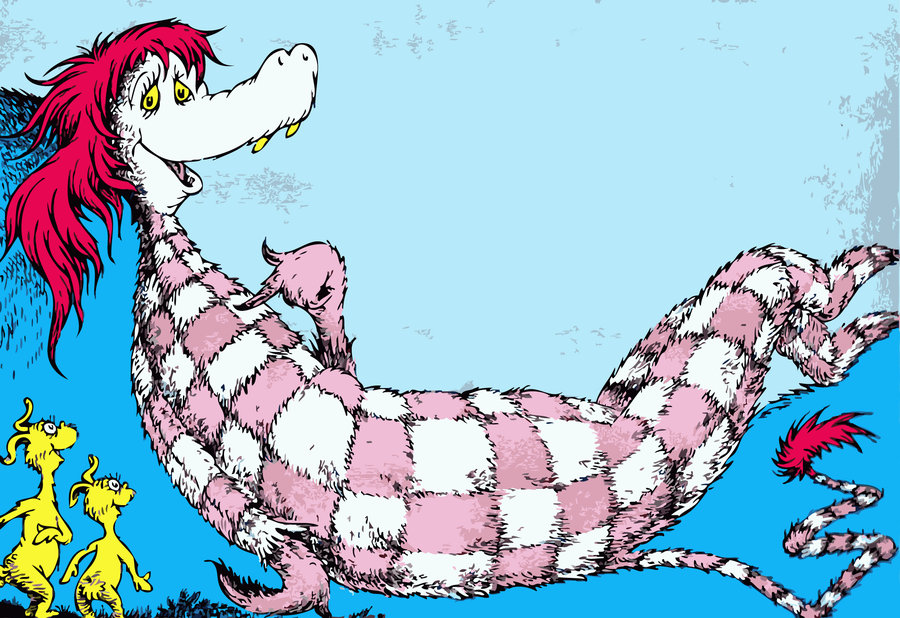
Mixed-up Animals-Dr. Seuss Imaginative Art


Dr. Suess Inspires-Mixed up Animals 


                                                                 Mixed-up Animals


Video Lesson


Monday, January 5, 2026

Sustainability- Don't Throw it Away, Make Something! Third Grade

  Sustainability Meeting the needs of people now without compromising the ability of people to meet their needs in the future. 

This means a lot of things, but in art class it can mean using materials wisely, and not wasting them. It might mean re-using paper, cardboard, magazines and other items rather than throwing them away. 

Recycle Logo" Images – Browse 1,022 Stock Photos, Vectors ...

Every time you throw something away it gets sent to a landfill. More and more rubbish is piled on top until it is too big and the landfill has to be closed. 

The great thing is that many things can be reused and recycled. 


Lets watch what this might look like for you.

PBS Garbage


The art room is a GREAT place to REUSE items. Let's think about magazines in particular. WHY should we reuse them?

PBS Magazines

Cut shapes out of a magazine page. Here they cut out the shapes of houses.


Make an animal portrait. Get a copy of an animal and cut and glue magazine papers to cover most of the animal, leaving some of the original features visible.


Cut out shapes to create texture in your art.

You could use lots of different colors, or try to stay in the same color family, like all greens or all blues.

Magazine Upcycle | Magazine crafts, Crafts, Preschool crafts


Make a portrait, use magazine facial features, and cut squares to frame it!


Find images you like, cut them out and create a story-or make something wacky and wonderful!

Places and Spaces: Near and Far-Second Grade

 Perspective- concept that objects are drawn smaller when they are farther away and larger when they are closer to the viewer. 


 Artists create art about places they visit, live, work, and play. Sometimes artists choose to make their drawings and paintings look like a 3 dimensional space even though they are on a flat 2d surface like paper or canvas. 


Near and Far

Draw the closest thing first, and draw LARGE
What is the largest thing in this picture?


Draw things that are far smaller and higher up on the page.
What appears far away in  picture?


Beauty in Weather: Winter Snow

 VARe7A.1

Engagement with art can lead to understanding and appreciation of the natural world. 

We have been talking about beauty in our world and how artists use beautiful things to get ideas.


Snow is Beautiful

Beauty in Weather: Winter Snow


How do artists share the beauty of a snowy day in their art? How can you?

Tuesday, December 9, 2025

Who I am: Figures in Motion-Second grade

 What activities do you like to do? How do you move during those activities? How can you make a person who looks like they are moving? 


In art, a figure is a person. So when we create a drawing of a person, it is called figure drawing.

Artist, Keith Haring is famous for his paintings of figures interacting with one another. 


If you want to draw a person that is moving, you need to know where your body bends.
(Identify the places your body bends.)


By changing the positions of these parts of the body, you can make your person look like he or she is moving.
What are some activities you can draw a person doing?


Draw a stick figure. draw dots at the parts of the person that bend.(knees, elbows, waist, hips, shoulders ankles etc.) Draw people in several poses. 


Color over the stick figures to add clothes, and the details of the person. 
As part of our Who I am unit, think of an activity you enjoy, and draw yourself engaged in that activity.
What are some activities you enjoy? Can you draw a friend too?


Thursday, October 23, 2025

Choice At Last!

 Introduction to Choice Art


It's time to put all the studio skills we learned to work!


Today we will review the studio procedures, choose a stick for a studio, think of an idea, and make some art! 

Welcome to CHOICE ART!!!


                                                                            Mrs. Junge


                                                                    Mrs. Pallo

Friday, October 10, 2025

Fibers Studio Opener: Third Grade

 What is Fiber Art?


Fiber art is a type of art that is made from fibers such as yarn, string, or cloth to create art. 

You may be familiar with some forms of fibers such as sewing, quilting, crochet, and felting, because maybe you have a family member who enjoys creating using these methods.

(stuff below only a part of what will be included in video)

Fiber artist, Bisa Butler creates life sized portrait quilts, and spends up to 1000 hours creating them out of unique fabrics. 


Artist, Michael Brennand Wood creates using wood and fibers, often using floral themes 
He incorporates a lot of embroidery into his work.


Artist, Judith Scott created large sculptures out of yarn and other fibers. She was born with down syndrome and did not talk. Her art was her language, and her first sculpture was said to be her first words.


DAY 1

DAY 2


Fibers Studio Vocabulary:

Needle

Felt

Thread

Knot 

Overstitch


Fibers Studio Opener: Second Grade

 Fiber arts is about making art with thread, yarn, paper, and fabric, made from both natural and man made fibers. 

These next two weeks we are working on fibers skills to prepare us for making our own stuffies.


Second Grade Skills

- Thread a needle
- Tie a knot
- Sew around two pieces of felt with an overstitch (whip stitch)
- Stuff and sew closed to make a stuffy


Second Grade Video


Thursday, October 9, 2025

First Grade: Drawing Animals with Shapes- Draw/ Paint

   Painted Animals

Drawing first in the Painting Studio

Responding

8. Interpret intent and meaning in artistic work.

A. Interpret

Interpret art by categorizing subject matter and identifying the characteristic s of form


Shape- a geometric figure such as a square, triangle, or rectangle. 
Painting- the process or art of using paint


We can learn to see shapes in everything around us.
Knowing the names of shapes can help us describe and understand a work of art.

What shapes did you use to create your artwork today?


Draw Big!


What shapes do you see?
what would you draw first?


Drawing With Shapes in pencil/sharpie, Painting in Watercolor


Friday, October 3, 2025

Sculpture Studio Opener: First, Second, Third


The Sculpture Studio


Sculptures are three-dimensional works of art made from clay, wood, metal, or stone. Some sculptures are tiny, while others are huge, like the Statue of Liberty! Sculptors use their hands and special tools to shape their artwork. In our art room we mostly focus on paper sculpture, and cardboard sculpture, but may experiment with other sculptural techniques.

Create

1. Generate and conceptualize artistic ideas and work.

A. Play & Ideation

Engage collaboratively in exploration and imaginative play with materials


B. Investigation

Use observation and investigation in preparation for making a work of art.


Welcome to the Sculpture Studio!

This week we are learning about working in the sculpture studio, using construction paper!

Materials Needed:
Colored construction paper
Scissors
Glue (bottle)
First Grade Sculpture Lesson


Second Grade Sculpture Lesson


Third Grade Sculpture Lesson


Thursday, September 25, 2025

Drawing Studio First Grade: Drawing From Observation- Nature Up Close

 Drawing from Observation-Nature Up Close

Create

1. Generate and conceptualize artistic ideas and work.

B. Investigation

Use observation and investigation in preparation for making a work of art.

Today we will learn to look carefully at flowers and leaves to discover the beautiful details in the natural world. This is called an observation drawing.

During this week, you can look for other natural objects that you might like to observe closely and draw.


Day 1

Day 2


Have you ever looked at a flower up close?

What did you notice that you didn't see from far away?


Here is a painting from far away of a field of poppies


Here is a painting close up of a single poppy


Do you think this artist could paint this flower from memory? 
Or would the artist need to see the flower in real life?

This artist, Georgia O'Keefe would study flowers in real life so she could notice all the lines, shapes and colors.


Some artists like to observe nature from a distance, far away

Some artists like to observe nature up close

Which way do you like to observe nature?


Tuesday, September 16, 2025

Painting Studio Opener: First, Second, Third


The Painting Studio


Create

1. Generate and conceptualize artistic ideas and work.

A. Play & Ideation

Engage collaboratively in exploration and imaginative play with materials


B. Investigation

Use observation and investigation in preparation for making a work of art.

Welcome to the Painting Studio!
Painting is another fun way to create art. Artists use brushes and paint to add colors to their artwork. Some paintings look real, while others are abstract, using shapes and patterns. 
This week we are learning about working in the painting studio. 


We are going to learn studio procedures for set up and clean-up, look at some paintings by master artists, learn how to care for the materials in the painting studio, and explore painting with watercolor paint. 

We will complete the skills we learn for our painting studio.


Materials Needed:
White Paper
Pencils, Eraser, Sharpie
Watercolor paint (Third Grade)
Cake Tempera (First and Second)
Paintbrush
Cup or bowl of water
Paper towel

1st Grade Video Lesson:

Day 1 Painting Skills & Clean up, Drawing and Sharpie on Choice Work
Day 2 Painting Choice Work


Second Grade Video Lesson:
Day 1 Painting Skills & Clean up, Drawing and Sharpie on Choice Work
Day 2 Painting Choice Work

Third Grade Video Lesson:
Day 1 Painting Skills & Clean up, Drawing and Sharpie on Choice Work
Day 2 Painting Choice Work