1. Generate and conceptualize artistic ideas and work.
A. Play & Ideation
Engage collaboratively in exploration and imaginative play with materials
Welcome to art class! We are going to have an exciting year together in
art, full of discovery and art making. We will draw, collage, paint sculpt and stitch and sew. We are going to continue to learn what it means to be an artist and how to work
like an artist.
Each year we go over our class expectations.
1. Take care of people
2. Take care of stuff
3. Behave like an artist
How do we take care of people in the art room?
Share the colored pencils with your table mates. If someone is using a color you need say: "may I please use the blue pencil when you are
finished?" Then wait patiently.
How do we take care of stuff in the art room?
For example, when we are done with a marker, we should place the cap back
on till it snaps, so that the marker doesn't dry out.
How do we behave like an artist?
One way that I show I am an artist is I think about what I'm going to
make before I begin.
I always start with an idea even though it may change along the
way.
Today we are going to get our Studio Practice Books.
We use our studio practice books to learn skills and classroom routines
for choice art.
Pass out books/ Name and class code.
Supplies Needed:
Studio Practice books
Pencil and Eraser
Crayons
You will create a piece of art using drawing supplies.
You can draw whatever you decide.
Open your book to the page at the beginning of the book that says: "Draw
a picture."
Think about what you want to draw. Close your eyes and try to picture what you want it to look like. When you are ready, you may begin. Take your time drawing in pencil. Draw large enough so you fill the page and you can color it in.
Let's begin our art, and before we leave we will talk about some of the
ways we behaved like an artist.
Clean-up expectations:
I will always play the clean-up anthem at clean-up time.
Clean-up is silent.
Everyone should finish cleaning up their studio space before the end of
the song.
Today, during clean-up, you will be responsible for putting your supplies in the bin neatly, and putting your book in the box on the supply table.
Reflection:
After the drawings are completed, discuss the ways they behaved like an artist during class:
Include thinking of an idea, working quietly, sharing and taking care of supplies.
Remind students to raise their hands and wait to be called on.
In school, we are respectful by raising our hands when we have something
to share.
Thank individual students for being respectful and raising their hands.
If extra time, especially in first grade:
Line Up Time.
Practice line-up expectations:
Quiet
Feet on tape
Facing forward
VA: Cr, Anchor Standard 1: Generate and conceptualize artistic ideas and
work
Living in South Africa, the Ndebele Nation is an ethnic group that is known for its incredible artistic talent. Using their homes as canvas and studios, the women of this ethnic group create beautiful works of art that have been passed down from generation to generation. Not only do they paint their houses in a unique style, but they also use their homes as studio spaces. At home, they create wearable beadwork like headgear, bracelets, and necklaces.
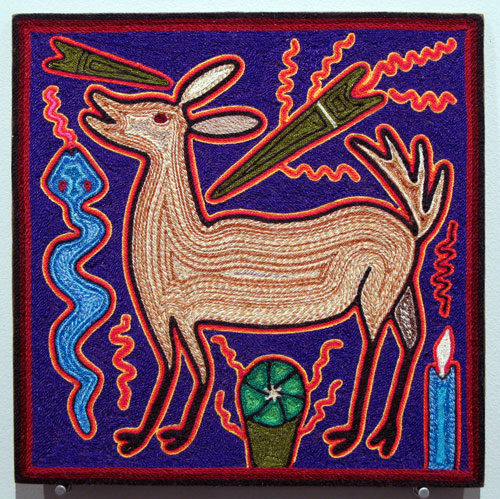
The Huichol Indians of Mexico are known for their yarn paintings.
The Huichols take beeswax which they melt in the sun, and spread it over a piece of wood. They then push colored yarn into the wax to create images. Modern Huichol artists use glue or spray adhesives.
Each color, every line and symbol, no matter how abstract, has a meaning.
You can create your own yarn painting using glue and scraps of yarn and wool.
Chinese painting is one of the oldest painting styles still used today.
The subject is usually nature:
Bamboo
Flowers
Birds
Fish
Panda Bears
The "Six Principles" for Chinese Brush Painting
1. Your state of mind in shown in each brush stroke. If you are feeling calm and peaceful your brushstrokes will be calm and peaceful. If you are nervous or stressed your brushstrokes may look different.
2. Using your brush correctly is very important.
3. Look at your subject and only add the most important things. Not many details.
4. Colors don't need to be correct.
5. Keep most of your paper white so the picture is simple. Avoid symmetry. (Things being the same on both sides)
6. Look at and copy the work of the masters. (People who are experts at Chinese brush painting)
You can try Chinese Brush Painting. Children all over the world practice this style.
You can look at this painting and try to copy it. Write your title vertically. Add your initials (this is called your “chop”) at the bottom with a red marker.
After students have completed their paintings, encourage them to discuss the differences between copying to perfect your technique vs. self-expression. Ask your students which method they prefer and why.