Wednesday, November 29, 2017

Second Grade-Mandalas


Mandalas are symmetrical, geometric designs that are said to represent the universe. 


The word Mandala means the “whole world”  or “circle”
Which makes sense because our world is a circle!


People from all over the world make their own versions of mandalas.
Buddhist monks making a sand mandala
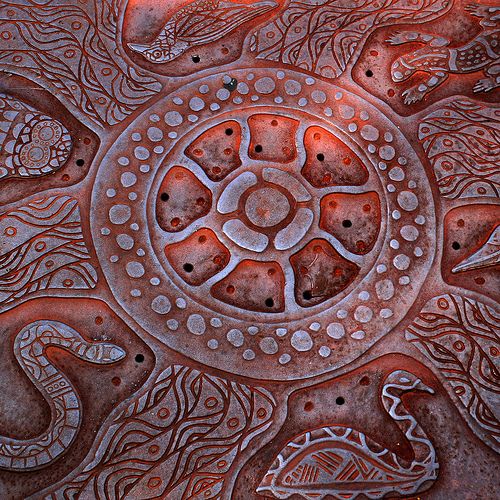
W. Australia

Celtic Mandala

Hopi Mandala

Video: Sand Mandala


Mandalas can be made with many materials
Crocheted Mandala


Painted dot Mandala


Natural materials--stones, flowers, seashells

Drawing Materials


You can make a mandala. 
The first thing you need is a CIRCLE!


Mandala Video

Wednesday, November 15, 2017

Extra Art-Chalk Pastel on Black Paper

 Chalk Pastel can be layered on black paper 


 Use the side of the chalk for large areas 
Use The tip of the chalk for bold lines, brightly colored areas, and details.
Layer color over color to create exciting textures, and to bring out details.


Friday, November 3, 2017

Texture-Second and Third Grade


Creating Textures within your Art


Texture is how something feels or how it looks like it feels
Artists show texture in the art they create.


  • Using a sponge to apply paint, and a comb to create textutre.
  • Thinning Tempera-creating a tempera wash
  • Drawing with the back of the paintbrush in the wet paint


How do artists show texture?
why?

Is there ever a good reason not to show texture? 

Thursday, November 2, 2017

Extra Art Third Grade Zentangle Images

 Zentangle  is a relaxing, and fun way to create beautiful, and interesting images by drawing structured patterns. Your focus should be slow and deliberate. Pay attention to every mark, relax and have fun!!!

In the future, you may want to choose to zentangle in the drawing studio as part of choice. Today will be a good introduction to zentangling!


Monday, October 16, 2017

Center of Interest-Second and Third Grade

The center of interest is the part of the art that we find most interesting when we look at a work of art for the first time. It attracts our mind, which leads our eye to that part of the art. 

The center of interest is usually the most important part of a work of art. 
Examples are faces, humans and animals, letters, numbers, and objects. When we scan an image for the first time, our attention is naturally drawn to these items.


Leah Saulnier-Lemon Drops
Nam June Paik-Zen for Head

The Captive Unicorn-Tapestry


Think of the Center of interest as the main idea. Other parts of the art are the details that support the main idea. Look at the collage below. What is the center of interest? Does the center of interest have to be in the center of the artwork?
Romare Bearden-Return to Ithaka


What in your art will the center of interest? What details will support your most important idea?